




The Cruel Face of Religious Authority: Father Patricio Sánchez Molinari, “Divine Justice,” and the Politics of Fear
When Faith Becomes a Theatre of Punishment
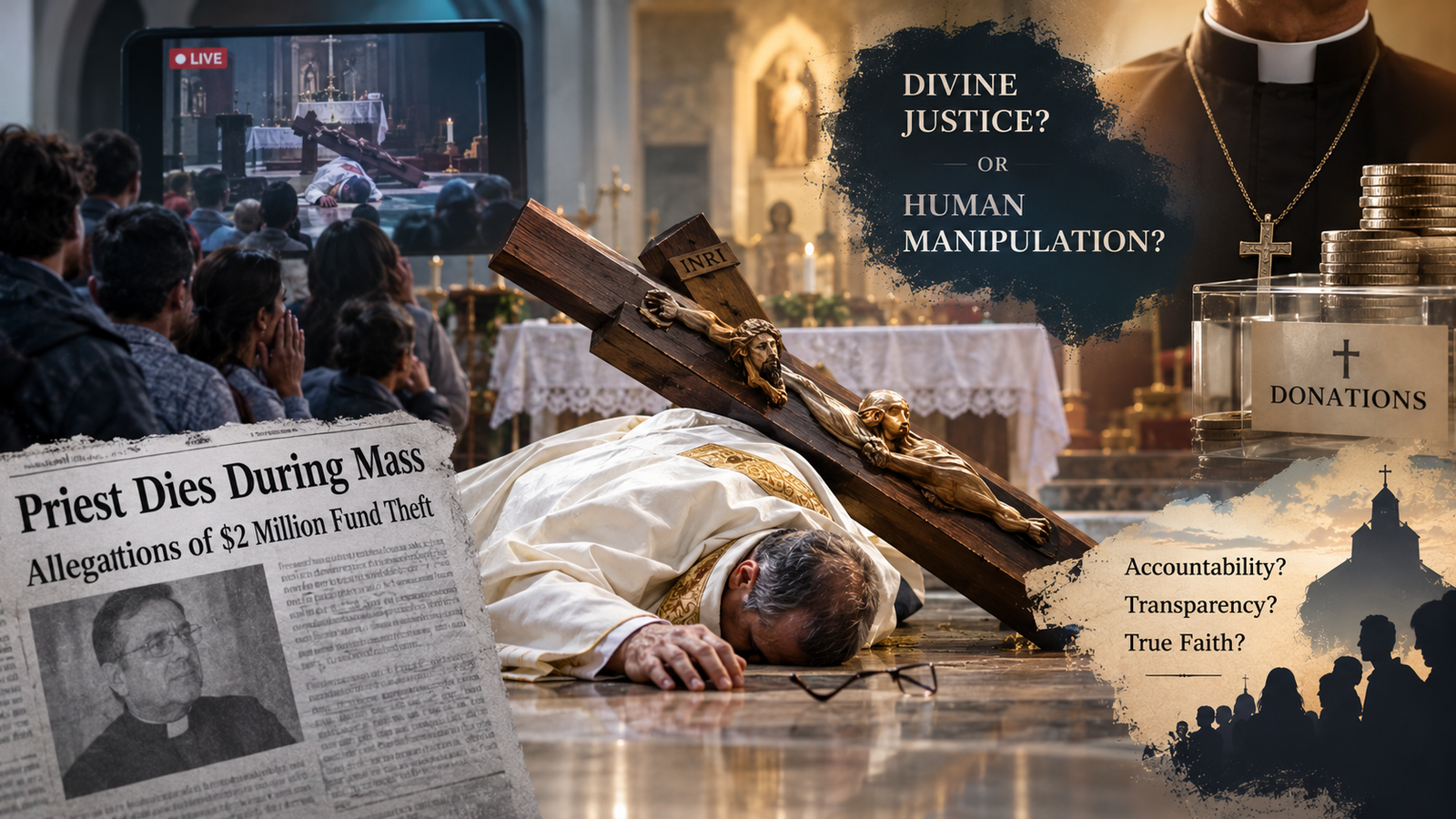
The death of Father Patricio Alfredo Sánchez Molinari during a livestreamed Mass in Guayaquil, Ecuador, on 17 October 2026, has become the centre of a disturbing public controversy. A massive wooden crucifix fell from behind the altar and struck the priest, killing him as worshippers watched in horror. The incident was captured on camera and circulated widely across social media.
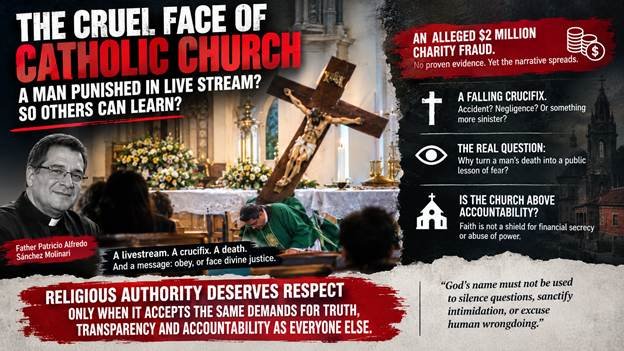
Soon afterwards, social media allegations claimed that the priest had stolen approximately $2 million in charitable donations. Some commentators interpreted his death as “divine justice,” suggesting that the religious symbol beneath which he died represented God’s punishment for alleged financial wrongdoing. However, the alleged theft remains unsubstantiated, and no verified evidence establishes that the Church deliberately caused his death. Nevertheless, the episode raises a disturbing question about religious power: how easily can a human tragedy be transformed into a spectacle of sin, punishment, and supernatural authority?
If religious institutions claim the authority to teach humanity about justice, they must also accept the responsibility to demonstrate transparency, accountability, and compassion. They cannot demand unquestioning obedience from believers while treating legitimate questions about money, authority, or institutional conduct as threats to religion itself.
The Cruelty of the “Divine Justice” Narrative
The most troubling aspect of this controversy is not simply the falling crucifix. It is the eagerness with which some people have interpreted a man’s violent death as evidence of divine punishment. This narrative creates an extraordinary moral spectacle: an allegation of financial misconduct, a priest standing before an altar, a crucifix falling upon him, and an audience invited to believe that God has delivered a final verdict.
But who has established that verdict?
No court has established the alleged theft. No verified evidence has demonstrated that the death was an act of punishment. No investigation has established that anyone deliberately arranged the incident to frighten or discipline another person. To present these interpretations as facts is to replace justice with superstition and evidence with theatrical symbolism. Yet the broader criticism remains important. Religious authority becomes cruel when fear is used to control human beings, when suffering is presented as proof of guilt, or when a person’s death becomes a warning to others about the supposed consequences of disobedience. If anyone deliberately engineered such an event to terrorise believers, it would represent a grave abuse of power. But that is a hypothetical ethical judgment, not an established explanation for Father Sánchez’s death. The distinction matters because the pursuit of truth must not become another instrument of intimidation.
Is the Church Above Accountability?
The Catholic Church has a long history of charitable, educational, and healthcare work. That record does not make every allegation against it true, nor does it exempt its institutions from scrutiny. Whenever donations are collected in the name of God, donors have the right to know how their money is used. If credible evidence suggests that charitable funds have been diverted, independent audits and lawful investigations are essential. If misconduct is established, those responsible should face appropriate consequences. The alleged $2 million in this case must therefore be investigated only if credible evidence supports the accusation. Repeating an unverified figure does not establish a financial crime. The larger institutional problem is the danger of unquestionable authority. No priest, bishop, religious order, or church administration should be beyond investigation simply because it operates in the name of God.
Faith should never become a shield for financial secrecy, and religious status should never become immunity from the law.
The Crucifix: A Symbol of Sacrifice, Not a Licence to Condemn
The irony of a priest dying beneath a crucifix has fuelled dramatic interpretations of the event. But the Christian cross represents sacrifice, suffering, and redemption; it does not provide forensic evidence of another person’s guilt. In Luke 13:4–5, Jesus refers to people killed when the tower of Siloam fell and rejects the assumption that they were greater sinners than others who survived. The passage challenges the simplistic belief that a sudden death proves divine condemnation. Why, then, should anyone confidently claim that Father Sánchez’s death proves he was being punished for alleged wrongdoing?
The question is not whether people may hold religious beliefs about providence. They may. The question is whether those beliefs should be used to declare a real person guilty without evidence. A responsible religious community should distinguish spiritual reflection from factual investigation. A fallen crucifix requires a technical inquiry into its installation and maintenance. An allegation of fraud requires financial evidence. An allegation of intentional killing requires evidence of criminal conduct. None can be resolved by declaring that God has already delivered a verdict.
A Warning to Religious Institutions
The incident should provoke a serious examination of the relationship between religion, institutional power, and public trust. If the crucifix fell because of negligent installation or inadequate maintenance, responsibility must be assessed through an independent investigation. If financial irregularities are substantiated, the relevant authorities must act. If the allegations are false, they should be corrected publicly. The reported technical investigation into the fallen structure is therefore essential; the available reporting does not establish that the incident was deliberately orchestrated. The Church’s credibility will not be protected by supernatural explanations, dramatic slogans, or demands that believers remain silent. It will be protected by evidence, openness, and a willingness to accept scrutiny.
Conclusion: Justice Cannot Be Manufactured Through Fear
The death of Father Patricio Sánchez Molinari must not be converted into proof of a financial crime or a fabricated story of deliberate religious punishment. The alleged theft remains unverified, and the circumstances of the fatal accident require evidence-based investigation. But the controversy exposes a wider moral danger: the use of religious language to turn tragedy into a weapon of fear. If any institution were to arrange a person’s death as a public lesson to others, that would be cruelty, not divine justice. If an institution concealed established financial wrongdoing behind religious authority, that would be a betrayal of the trust placed in it. Neither accusation, however, should be made without evidence.
God’s name must not be used to silence questions, sanctify intimidation, or excuse human wrongdoing. Religious authority deserves respect only when it accepts the same demands for truth and accountability that it places upon everyone else. The ultimate test of a church is not how powerfully it speaks about divine justice. It is whether it practises justice when its own authority is questioned.