




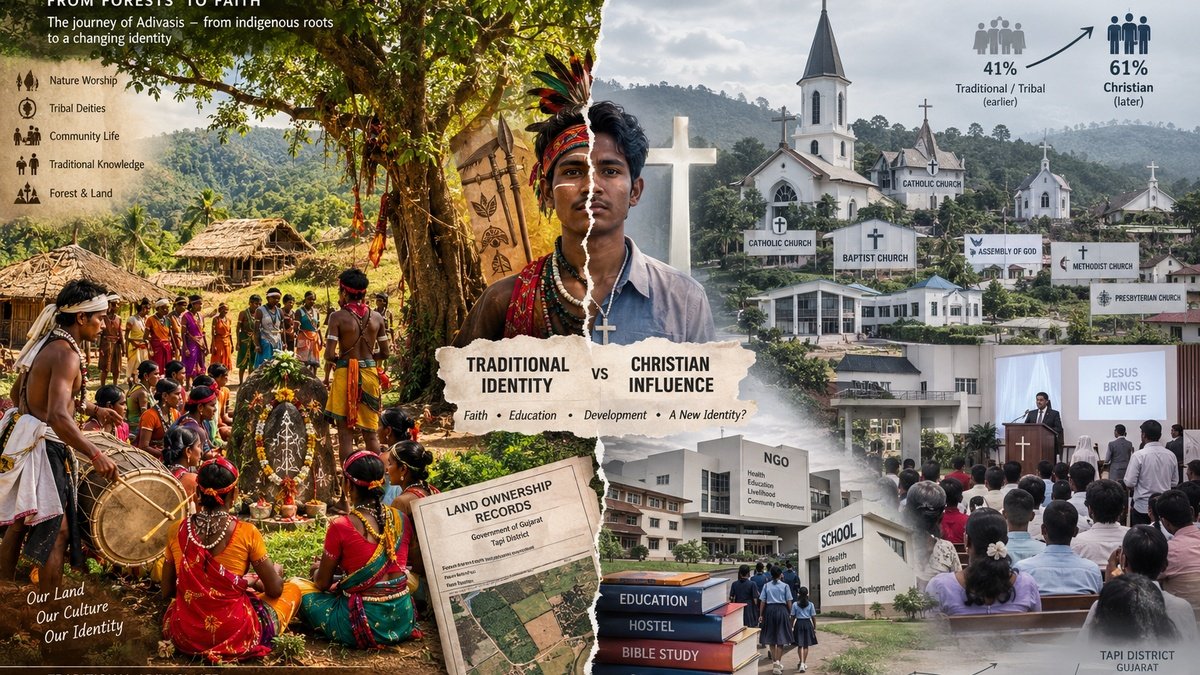
Evangelization of Adivasi in Tapi District of Gujarat
Abstract:
The tribal people has been forcefully imposed by objectively at history, attitudes and behavior of various groups of the people who wants to de-tribilized them by modernization-urbanization. The missionaries having mask of their own idealized image but having “shadow side” that affected tribal people. The Christ Missionary activity gained momentum only after the arrival of churches that came with the traders from Europe. Outside of their homeland, Christianity is the oldest home in India. Christianity in Indian is primarily due to the efforts of evangelization of the missionaries from very early stages of tribal civilization. Christian Churches understood the local resident and makes the forced towards modernization with new transformation. The Churches are on the mission to make demographic change in Tapi district. The present study discussed about de-tribalization of version of tribes of Gujarat into Christianity or increasing politicization of the whole issue of conversion. The tribes in Gujarat are not only on the margins of faith, but are also marginalized in terms of their identity and in terms of economy, culture and religious believe.
- Introduction:
Adivasi communities often blend elements of their indigenous beliefs with Christian teachings. This can result in unique expressions of Christianity that incorporate traditional rituals, symbols and ceremonies in original Adivasi culture. The conversion of tribal communities into other religions initiated the religious change and cultural change in the community. It has resulted in westernization, urbanization and changes in cultural practices, ritual, occupation, tradition causing harmful repercussions of tribal ethnicity and values. Together with the Adivasi’s belief system and worldview, their egalitarian ideology and the relation with nature have to be considered in order to understand their social system. The Adivasis are organized into local communities, equally ranked and having democratic assembly and consensus (Blanco-Sarto, P., 2021). In general, the world culture brings to one’s mind things of the past. Cultural represents historically transmitted patterns of meanings, embodied in symbols, a system of inherited conceptions, expressed in symbolic forms by means of which human beings communicate, perpetuate and develop their knowledge about and attitude towards life (Harald Tambs-Lyche, 2020). The Christian mission have always been engaged in what is today called the process of contextualization and evangelization. Many Adivasi, especially in South Gujarat, settled the city centers and suburbs closer cities to Tapi, Surat, Valsad and Navsari occupy the financially. Modernization play key role in Hinduisation of Non-Hindu gradual fashion that reflects in the creation of new society in Adivasi community. Churches forced individuals and communities, embracing their own culture and providing empowerment and new identity, which is largely de-tribalized the Adivasi in Tapi district.
2. Methodology:
During the study, the historical, explanatory, systematic and combination approach is given. The study is made principally on the basis of existing literature; books; periodical articles; research articles, search associated to internet access and unpublished writings. It also incorporates of field interview; primary data collection and secondary data collection especially for Adivasi community of Tapi district
3. Result
During the study, Songadh, Vyara, Dolvan and Uchchaltaluka studied mainly. Entanglement theory of independent cultural acquiring and force for conversion via missionary people that interact with each other in many ways. Preliminary, it is concerned with stability and change in demographic change that makes more complexity (Waldrop, 1992). The social culture and religion culture resides especially in the social relationships within and between institutions and agents (Schreiter, 2001). It is highly complex because in the interactions of missionary and religious institutions with vulnerable people by changeover adaptation of Adivasi to Christianity. This domain results in local disaster to manifold ways in local community structure that change their original beliefs and identity. These changes observed by increasing the number Churches Songadh, Vyara, Dolvan and Uchchal taluka (Graph-1). In these four talukas, Songadh has maximum 41% of Churches, that creates enforce of existing community, provide an opportunity for adaptation of new culture and religion that leads to demographic change in villages. Local knowledge and understanding of Adivasi culture and religion is different than adapted culture of Christian Adivasi. In recent decades several publications pointed to this demographic change in Tapi district that creates religious crisis and conflict among local Adivasi population. At the same time, some Adivais people reject Christianity as a form of new culture imposed to them, that there conflict creates. The conversion has basically started because of the poor miserable condition of the tribes. At the same time, Adivasi Christians may seek to maintain connections to their cultural heritage and also recognition of their own indigenous people but New Dharm-sthal and Christian culture results in conflicts with change in social structure.
Gujarat: Ancient Hindu temple in Tapi demolished to Build a Church, Hindus prohibited from offering prayers published in OpIndia, October,2022. https://www.opindia.com/2022/10/gujarat-ancient-hindu-temple-in-tapidemolished-to-build-a-church/
Adivasi Samaj ne Nasthkarvanu motu shadyantra, Divyabhaskar, Bardoli-Vyara Edition, 6th March, 2024 Students mass conversion in Schools at Tapi, Divyabhaskar, Bardoli-Vyara Edition, 21st September,2023.
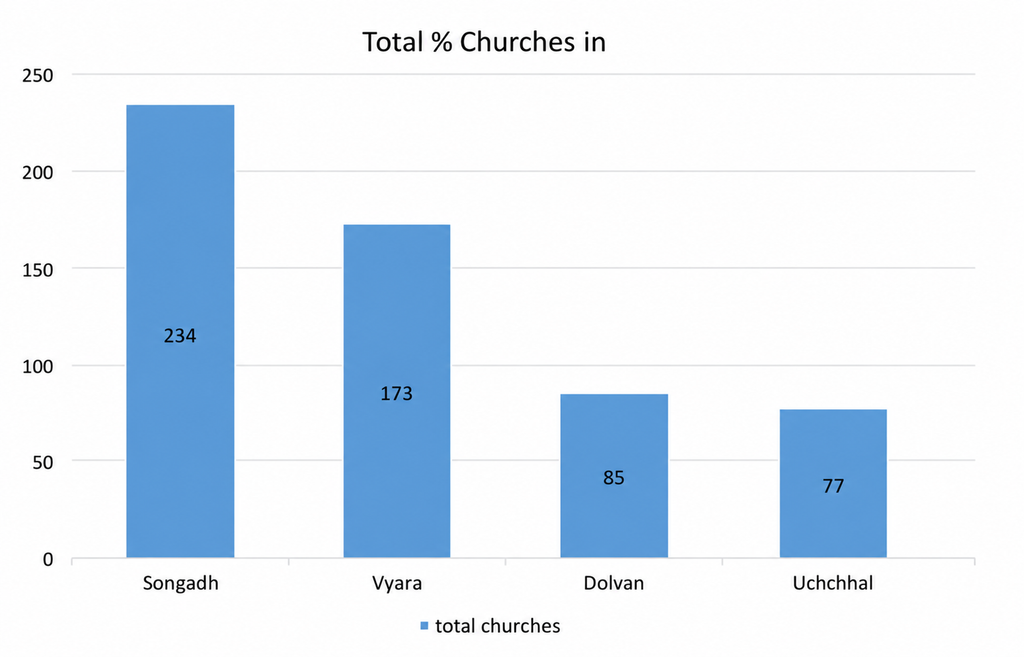
Graph:1- The dominance of Churches in four talukas of Tapi district. Total percentage of new religion place in Songadh, Vyara, Dolvan and Uchchhal, 41%, 30%, 15% and 14% respectively.
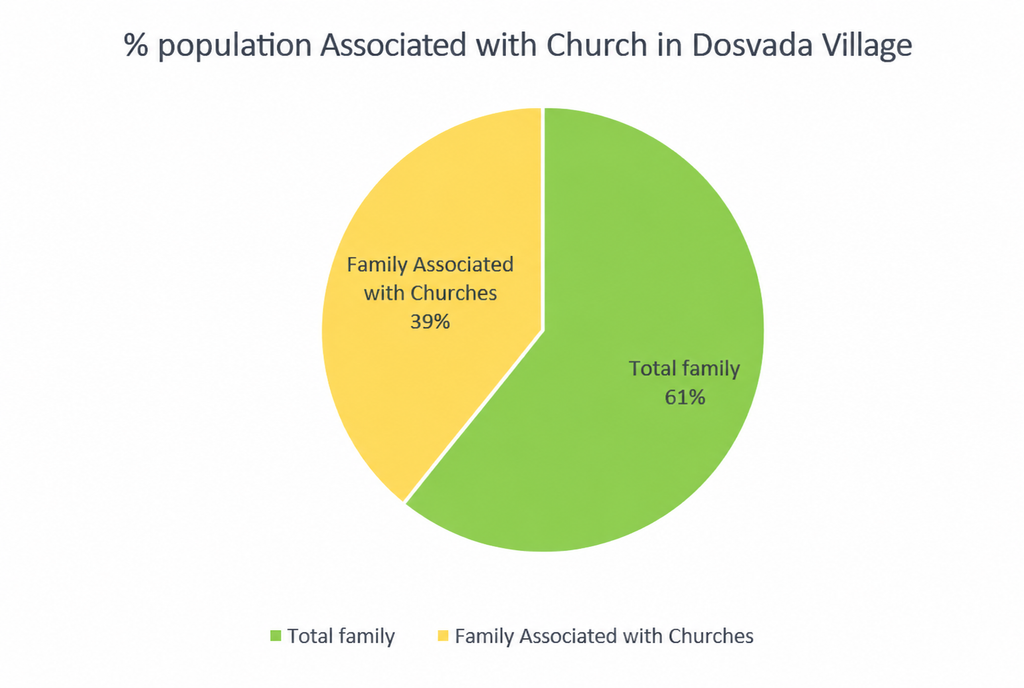
Graph:2- Population dynamics of Songadh Taluka where Dosvada Village has 61% population is converted in Christianity.
At the beginning many factors observed in the district that missionaries becoming familiar with the Adivasi religious mentality, besides the original sin theory of Christianity, they established theory of faithfulness. This results in genocide of Adivasi religion, culture, and believe in the whole district (Graph-2). The Dosvada village where 61% of population follows Christianity, due to this external disturbances, internal absolute segregation of family and society become normal in the district. Upto to certain level Adivasi family values are collapse, when the Christianity as the ideology offers oppressed social strata increasing distance among the community. Furthermore, the Christianity was considered as destroying the social order which stressed the paternal relationship between Bhil Raja and his people, as well as filial piety as the most essential virtues. Sometimes, social systems undermining and destroyed legitimacy of Adivasi ideology, the society also involved in conflict and protest against this conversion
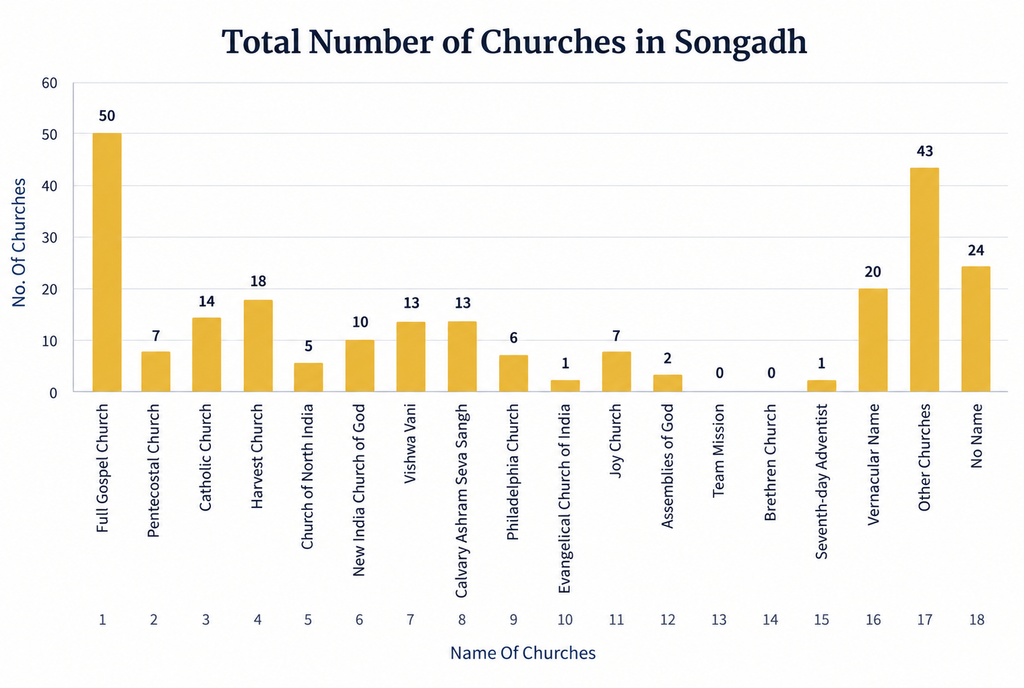
Graph:3- Total number of churches in Songadh taluka.
Illegal construction of churche in Navunevada village of Nizar taluka in TapiDistrict demolished by Villagers. Divyabhasker, Vapi-Valsad edition, 22nd March, 2023.
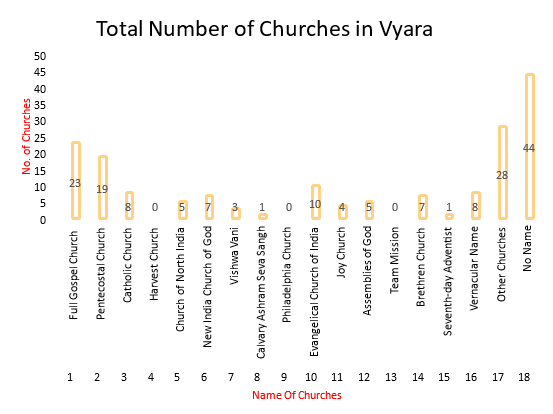
Graph:4- Total number of churches in Vyara taluka. The district such as Tapi, where majority of the Adivasi community residents live on small pieces of land which barely have playground for children. The church started to apply Eurocentric understanding of the land and creatively adopt a recombinational model which would use land ownership which is an asset of Adivasi community. Total 18 different missionaries are creating their hybrid model and evangelization of Adivasi in Tapi district. It is problematic to observe that the church has a captive mindset to establish its own scheduled agenda which affect the majority of the population. This demographic change observed in nearby district Valsad, where the total number of churches are continues increasing, in 2001 the only 15 churches reported in 2021 reaches to has been reported. The different association of churches has different strategies. The church should be complex in support by not only being role model to making its owned land by changing mind of local community (Graph 3 to 6).
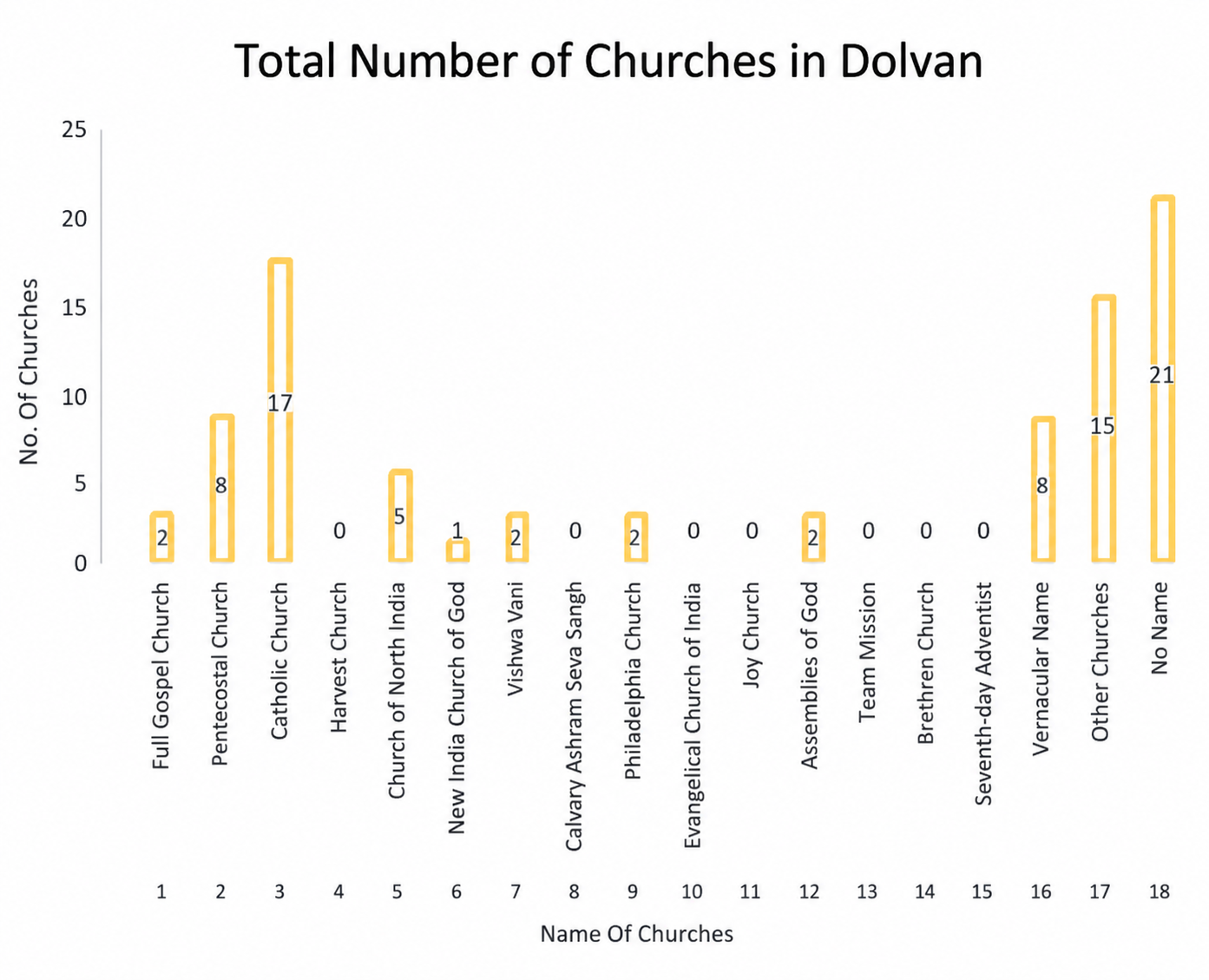
Graph:5- Total number of churches in Dolvan taluka.
Vyara and Songadh Taluka having more than 230 and 170 churches respectively which shows adaptation and penetration mechanism of missionaries in town place of district (Graph-3 and 4). The Full gospel churches activities are overshadowing in the both town area whereas Catholic churches evangelical and captive activities observed in Dolvan taluka (Graph-5). It is important to note that some local churches are proactive in their advocacy efforts in making the land they own accessible to ordinary residents of their local communities.
There is a great ideological space developed in tribal society in Gujarat, where it takes from overt propaganda campaigns against Adivasi rituals, where vernacular churches play significant role (Graph-6). These tactics may target specific demographics or societal groups of Adivasi community leads to vulnerabilities of community.
Graph:6- Total number of churches in Uchchhal taluka.
There is around 236 churches found in vernacular language among them most are in Songadh, few of the churches also running NGO in dialect language replace the RAO named as Mandal. The current reality of lack of confidence among Adivasi community cause of tension in local people and a “serious dilemma” for struggling protecting own religion and culture. On other hand, churches involved in education, health and skill development activities, Uchchal where 5.47km area only having total 77 Churches proactive (Graph-6). These results give the scenario of the churches that force to adapt new culture to Adivasi community of district.
4. Conclusion:
This study used a biblical conclude framework on the role of the church in the current conversation of available to ownership of land in Tapi district. The church has own ship of many institution with financial supports and assets, but still involving inde-tribilization of Adivasi. Impact of this de-tribilization observed on demography, cultural identity, social structure. This demographic change observed in nearby district Valsad, where the total number of churches are continues increasing, in 2001 the only 15 churches reported in 2021 reaches to has been reported. The new re-colonization of Christianity in rural and sub-region of Gujarat been observed. The total 569 new Dharm-sthal as churches area are established. This may use for slum communities, townships and many other forms for poor communities but this shows a meaningful step to make reforming of Adivasi community in Tapi district. This study alluded an example of impact of churches that leading and involving in conversion and changing in religious population.